


 Trang chủ
According to information from the Agriculture and Environment Newspaper, on September 5, 2025, the Con Dao National Park Management Board received five Nicobar pigeons (Caloenas nicobarica) from the Con Dao Special Economic Zone Economic Department. Previously, a local resident discovered and voluntarily handed over these birds to the authorities. According to the Vietnam Red List published by the Vietnam Academy of Science and Technology in 2024, the Nicobar pigeon (Caloenas Nicobarica) is classified as endangered (EN).
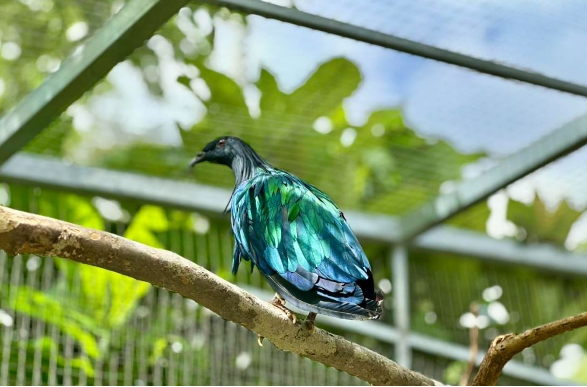
Rare Nicobar pigeons handed over to authorities by Con Dao residents. Photo: Con Dao National Park Management Board.
Initial examination revealed that the five individuals include one male and four females, weighing between 190 and 400 grams. Due to their injuries, they cannot be returned to the wild immediately and must be cared for and rehabilitated within the National Park. Once their health and adaptability are assured, the individuals will be released back into the wild, contributing to population replenishment and biodiversity conservation.
The Nicobar Pigeon is considered a “jewel” of the island’s forests thanks to its brilliant iridescent plumage, reflecting shades of blue, charcoal, and copper. Its neck has long feathers like a mane, while its short white tail creates a unique highlight. When mature, this bird is about 34 cm long, usually nests in tall trees, and lays only one egg per season. They mainly live in primary forests, mangrove forests, or small islands, feeding on forest fruits, seeds, and invertebrates. In Vietnam, they have only been recorded in Con Dao, with the most recent sighting being at the end of 2022 at Hon Bay Canh.
During their care, the Nicobar individuals will be introduced at the Environmental Education Center of Con Dao National Park, providing an opportunity for visitors to admire them while raising awareness about wildlife conservation. Representatives of the National Park affirmed that the voluntary handover of the rare birds by the local people not only successfully rescued an endangered species but also sent a clear message about the crucial role of the community in nature conservation.