


 Trang chủ
According to the Agriculture and Environment Newspaper, the recent discovery of a new mole species, Euroscaptor darwini – or Darwin’s Mole – in the Pu Luong Nature Reserve, Thanh Hoa province, has once again affirmed Vietnam’s position as a globally important biodiversity center. This announcement, published in the scientific journal ZooKeys, not only expands the country’s species catalog but also provides valuable data shedding light on the evolutionary process of burrowing animals in Asia.
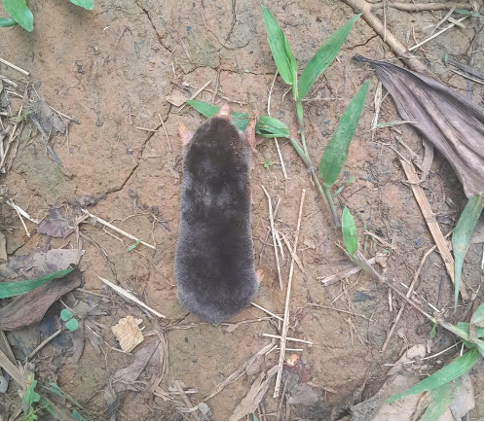
The new mole species was discovered in the Pu Luong Nature Reserve, Thanh Hoa.
The new species is named after the great naturalist Charles Darwin, who laid the foundation for the theory of evolution, in honor of the immense scientific value in studying the formation of this species. The research is the result of a collaboration between leading Vietnamese scientific institutions such as the Institute of Biology, Vietnam National University, Hanoi, Hong Duc University, and the Management Board of the Conservation Area.
The distinguishing feature that sets this new species apart from its relatives in the genus is its extremely short tail, only slightly longer than 2 mm, almost submerged in the skin, and consisting of only 6-7 vertebrae – a significantly fewer feature than any known mole species. This tail is covered with sparse, stiff hairs, forming a characteristic identifying mark. Mitochondrial DNA analysis, combined with examination of the skull structure and teeth adapted to a burrowing lifestyle, confirmed the genetic and morphological independence of the Darwin’s Mole. The clear morphological and ecological differences from other species in the genus indicate strong species differentiation occurring in Pu Luong. Scientists believe that the isolated limestone mountain terrain, climate, and characteristic vegetation of the North Central region have created independent “evolutionary oases,” where organisms adapt and rapidly form new species.
This discovery highlights the urgent need to conserve the humid limestone mountain forest habitat, the unique and sensitive environment of Darwin’s mole and many other rare species. As a group of organisms sensitive to environmental changes, moles can help scientists monitor ecosystem changes and strengthen Vietnam’s position on the world scientific map regarding evolution and conservation.