


 Trang chủ
With an area of over 14.8 million hectares and a forest cover of 42%, Vietnam’s forests are not only the nation’s “green lungs” but also play a crucial role in absorbing and storing carbon. This is a key factor as Vietnam commits to achieving net-zero emissions by 2050.
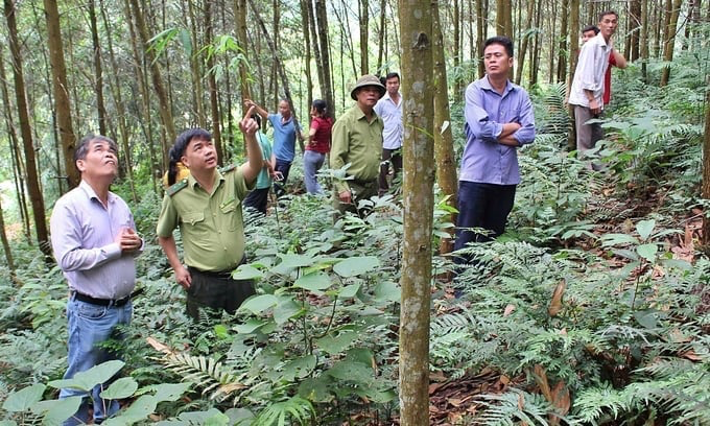
Survey collecting information for assigning planting area codes in Tuyen Quang province. Photo: Agriculture and Environment Newspaper
The carbon retained by forests has become an “asset” that can be exploited and transformed into financial resources to serve sustainable protection and development. Vietnam is one of the leading countries in participating in the REDD+ mechanism, building a measurement and monitoring system and conducting pilot projects in many ecological zones.
A major turning point was the signing of the Emission Reduction Payment Agreement (ERPA) with the World Bank, enabling the North Central region to sell 10.3 million carbon credits, generating over $51 million. This marks the first time that the value of carbon absorption from Vietnamese forests has been transformed into actual financial resources, opening up opportunities to participate in the global market. Calculations show that Vietnam could sell an additional 40 million carbon credits, equivalent to approximately $200 million.
To capitalize on this potential, the Government has issued a National Climate Change Strategy and is developing a Decree on carbon sequestration and storage services by forests. An internationally standardized Measurement, Reporting, and Verification (MRV) system, an independent credit granting organization, and a transparent benefit-sharing mechanism are considered key factors for the effective operation of the domestic carbon market. In addition to natural forests, the more than 4.7 million hectares of planted forests are also assessed to have significant potential in providing carbon credits. The issuance of codes for raw material forest plantation areas, linked to a management system and information transparency, is being implemented in several localities, creating a foundation for connecting plantations with the international carbon market.
Practical experience from the North Central region shows that revenue from selling carbon credits has contributed to improving livelihoods and investing in essential infrastructure for communities. This demonstrates that the carbon economy not only brings international value but also directly supports sustainable development at the local level.