


 Trang chủ
The Lung Ngoc Hoang Nature Reserve (Can Tho City) has long been considered the “green lung” of the Mekong Delta. With an area of over 2,800 hectares, it preserves a pristine wetland and river ecosystem along with rich flora and fauna resources, playing a crucial role in ecological balance and climate change adaptation.
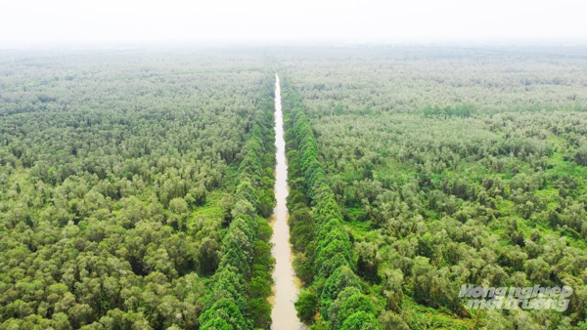
The Lung Ngoc Hoang Nature Reserve is considered the “green lung” of the Mekong Delta. (Image: Agriculture and Environment Newspaper)
Established in 2002, the reserve focuses on protecting biodiversity, especially aquatic species, waterbirds, reptiles, and rare native plants. Many species of freshwater fish and amphibians, once rare in their natural habitat, are still present here. Besides its characteristic melaleuca forest, the diverse wetland and river system has made Lung Ngoc Hoang a prominent ecological highlight of the region.
According to the Agriculture and Environment Newspaper, in the coming period, the conservation area will implement projects to conserve the wild rice variety – a plant closely associated with the history of the people of Southern Vietnam – while maintaining and developing rare aquatic resources. Simultaneously, an ecotourism development plan has been approved and adjusted, aiming to build the area into a destination that serves both scientific research and provides a space for close-to-nature experiences.
Unique tourism products will include activities such as boat trips through the forest, bird and fish observation, and learning about medicinal plants, combined with community tourism models, homestays, and local cuisine. This development direction will not only enhance the value of resources but also create sustainable livelihoods for people around the conservation area, limiting overexploitation. Beyond its tourism role, Lung Ngoc Hoang is also envisioned to become a “natural laboratory” for the region, a place where students and scientists can conduct surveys and research, and a location for environmental education for the younger generation.
With a combination of conservation and rational exploitation, Lung Ngoc Hoang promises to become an important highlight on the ecotourism map of Can Tho city, and at the same time a valuable natural asset of the entire Mekong Delta.