


 Trang chủ
According to information from Vu Quang National Park, through its automated camera trap system, the park has recorded the existence of many rare wild animal species.
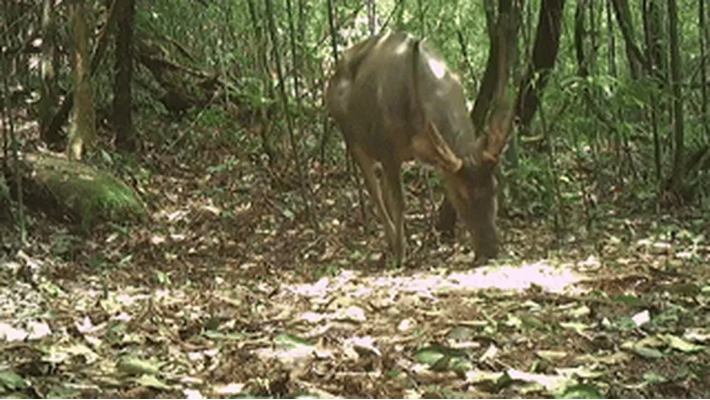
The large muntjac is currently classified as critically endangered according to the IUCN Red List (Photo: Vu Quang National Park).
The automated camera trap system has captured images and videos of many rare wild animal species, specifically recording the existence of the Asian elephant (scientific name: Elephas maximus), Asiatic black bear (scientific name: Ursus thibetanus), sun bear (scientific name: Helarctos malayanus), otter (including species belonging to the Lutrinae family), deer (scientific name: Rusa unicolor), large muntjac (scientific name: Muntiacus vuquangensis) and common muntjac (scientific name: Muntiacus muntjak) in Vu Quang National Park, which is of particular importance. These are rare and endangered wildlife species with high conservation value in Vietnam and worldwide.
The capture of the giant muntjac by camera traps is extremely important evidence, confirming that Vu Quang National Park is one of the last and most important areas for the survival of this extremely rare species. In light of these valuable discoveries, Vu Quang National Park will implement even stricter protection and conservation measures. These measures include increased patrols to combat illegal hunting and trafficking, habitat protection and restoration, and intensified research and monitoring programs to better understand the populations and behavior of these species. The successful protection of populations of rare species such as the Asian elephant, sun bear, deer, otter, common muntjac, and giant muntjac not only contributes to national biodiversity conservation but also affirms the particularly important role of Vu Quang National Park in the system of protected areas in Vietnam and the region.
Vu Quang National Park is known as one of Vietnam’s top biodiversity hotspots, home to many endangered and rare species prioritized for conservation. Located within a globally important ecological zone, it plays a crucial role in biodiversity conservation and environmental security for the central Truong Son region and the entire ASEAN area.