


 Trang chủ
UNESCO has just recognized Phong Nha-Ke Bang National Park (Vietnam) and Hin Nam No National Park (Laos) as Transboundary World Natural Heritage Sites, marking a significant milestone in conservation cooperation in Southeast Asia. This decision was adopted at the 47th session of the World Heritage Committee held in Paris on July 13th.
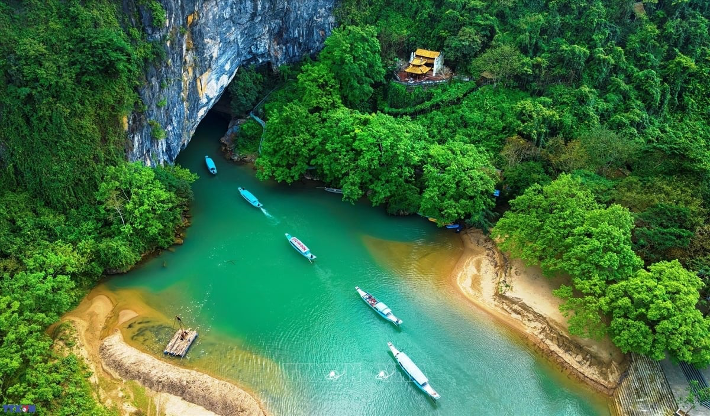 Vietnam now has its first Transboundary World Heritage Site, Phong Nha-Ke Bang National Park and Hin Nam No National Park. (Photo: VNA)
Phong Nha-Ke Bang and Hin Nam No are among the oldest and most intact limestone karst landscapes in Asia, formed over 400 million years ago. The system of over 220 km of caves and underground rivers, similar to Son Doong (Vietnam) or Xe Bang Fai (Laos), demonstrates millions of years of geological formation. Biologically, the combined area is home to over 2,700 plant species and 800 vertebrate species. Hin Nam No alone has recorded over 1,500 plant species and 536 animal species, many of which are endemic and rare, such as the giant hunting spider, the black langur, and the southern white-cheeked gibbon.
The joint nomination dossier was jointly developed by Vietnam and Laos since 2023, with numerous surveys, conferences, and management plans implemented. UNESCO highly appreciates this cross-border cooperation effort, considering it a model of exemplary conservation. The two countries agreed to apply separate management mechanisms but cooperate in scientific research, forest protection, sustainable tourism development, and support for local communities.
This marks the first time Vietnam has successfully assisted another country in developing a heritage dossier, opening up new avenues for cooperation in the region. With this event, Vietnam now has 9 UNESCO World Heritage Sites, three of which are inter-provincial or transnational. The inscription of Phong Nha – Ke Bang and Hin Nam No not only contributes to nature conservation but also enhances image promotion, fosters cooperation, and promotes sustainable development along the Vietnam-Laos border.