


 Trang chủ
Vu Quang National Park (Ha Tinh province) recently coordinated with relevant agencies to release six masked civets (scientific name: Paguma larvata) back into their natural environment. These civets were previously handed over to Vu Quang National Park by the Huong Son Forest Ranger Station for care. After a period of careful care, the civets were deemed ready to survive in their natural habitat, so the authorities organized their release back into the forest.
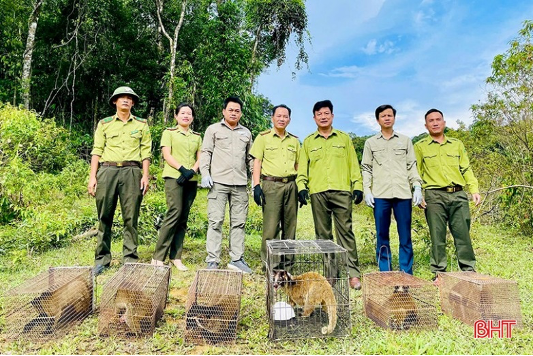
Rare wildlife species belonging to Group IIB are released back into the wild. Photo: Ha Tinh Newspaper
The masked civet, also known as the masked weasel, is a mammal with the scientific name Paguma larvata. This is a rare wild animal belonging to Group IIB, Appendix I (List of endangered and rare forest animals and plants) in Government Decree No. 84/2021/ND-CP, and is prohibited from being hunted, kept in captivity, or traded without a legal permit. The masked civet is listed in the World Red List (UINC) and is one of the animals requiring strict protection.
It is known that since the beginning of the year, Vu Quang National Park has received 35 wild animals from units and people inside and outside the province. These individuals will be gradually released back into their natural environment when the necessary conditions are met. Mr. Nguyen Danh Ky, Director of Vu Quang National Park, said: “The release of six masked civets back into their natural environment is proof of the park’s continuous efforts and those of relevant agencies in biodiversity conservation. Vu Quang National Park is proud to be home to many rare animal species, and each time we return an individual to its natural environment, it is a great success, making an important contribution to the protection and sustainable development of the ecosystem in this forest. We will continue to closely monitor them to ensure their safe integration and healthy development in their new habitat.”
After releasing them back into their natural environment, Vu Quang National Park will continue to monitor and protect them to ensure their safety.