


 Trang chủ
Recently, the American Museum of Natural History announced a list of over 70 new species identified in 2025. They stated that these discoveries include dinosaurs, mammals, fish, reptiles, and insects. Vietnam contributed two representatives: a rare rock-clinging fish and a bee species with a teddy bear-like appearance. This demonstrates Vietnam’s important role on the global biodiversity map.
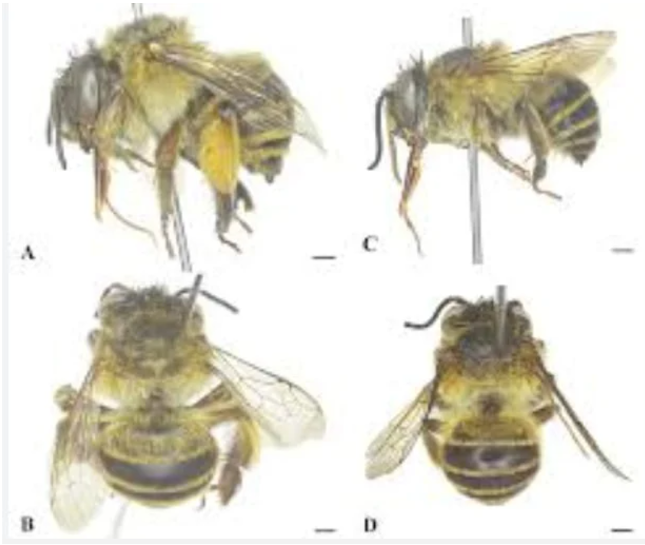
The new bee species, Habropoda pierwolae, also known as the “teddy bear bee,” is among the 47 fossil and modern insect species on the list. (Image: NUS)
Another representative from Vietnam is the Habropoda pierwolae bee. This insect impressed scientists with its thick fur and chubby appearance, earning it the nickname “teddy bear bee.” This discovery was published in a study by Vietnamese co-author Ngat Thi Tran from the Vietnam Institute of Ecology and Biological Resources.
Accordingly, the small carp with suction mouth, endemic to the Vietnamese highlands, has been given the scientific name Supradiscus varidiscus. According to museum ichthyologists, this specimen was actually collected and stored 25 years ago, but only now has it been brought out for detailed study and description.
Particularly impressive are the two new feathered dinosaur species from China that lived approximately 125 million years ago. Huadanosaurus sinensis was discovered along with the bones of two mammal species in its abdominal cavity, providing direct evidence of the last meal before fossilization.
According to Cheryl Hayashi, Senior Vice President and Chief Scientific Officer of the American Museum of Natural History: “These findings demonstrate the incredible richness of life on Earth and underscore the enduring value of natural history collections.”