


 Trang chủ
On December 20, 2013, at its 68th session, the United Nations General Assembly (UNGA) declared March 3 – the date of signing of the 1973 Convention on International Trade in Endangered Species of Wild Fauna and Flora (CITES) – as the United Nations International Wildlife Day to celebrate and raise awareness about wildlife worldwide. The theme for 2025 is: “Financing Wildlife Conservation: Investing in People and the Planet.”
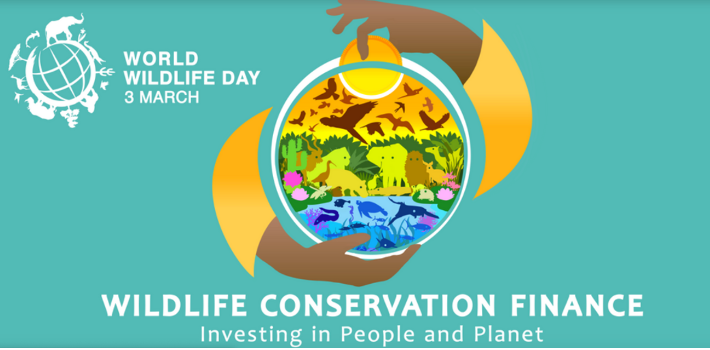
[Image caption: Poster for World Wildlife Day 2025. (Photo: World Wildlife Day)]
With this theme, this year’s World Wildlife Day seeks to unlock the financial resources needed to ensure the effectiveness and sustainability of conservation efforts, thereby building a more resilient future for both people and the planet.
(Image caption: World Wildlife Day poster 2025.) The CITES Convention was signed into law in 1973 and entered into force on July 1, 1975. To date, with 184 member states, CITES is the largest international conservation treaty in the world in terms of membership. The purpose of the CITES Convention is to ensure that international trade in endangered wild animals and plants does not threaten their survival in the wild, and it also provides various levels of protection for over 34,000 species of animals and plants.
In Vietnam, in order to restore, protect, and sustainably develop endangered, rare, and precious wildlife species that are prioritized for protection, on January 8, 2025, the Prime Minister issued Decision No. 49/QD-TTg approving the National Program on Conservation of Endangered, Rare, and Precious Wildlife Species Prioritized for Protection until 2030, with a vision to 2050.
The program sets out four specific groups of objectives including: (i) Effectively conserve endangered, rare, and precious wildlife species prioritized for protection: improve the population status of at least 10 species; conserve and restore the habitats of endangered, rare, and precious wildlife species prioritized for protection; (ii) Increase the number of endangered, rare, and precious wildlife species prioritized for protection that are bred for conservation and released back into the wild to restore populations; By 2030, ensure that at least 3 species are bred for conservation and reintroduced into the wild; (iii) Strive to achieve 100% of endangered, rare, and precious wildlife species prioritized for protection have management and monitoring plans in nature reserves, high biodiversity areas, and biodiversity conservation facilities; (iv) Policies and laws on the conservation of endangered, rare, and precious wildlife species prioritized for protection will continue to be improved; organizational and management capacity will be strengthened to effectively support the control, prevention, and mitigation of risks, threats, and negative impacts on their populations and habitats.